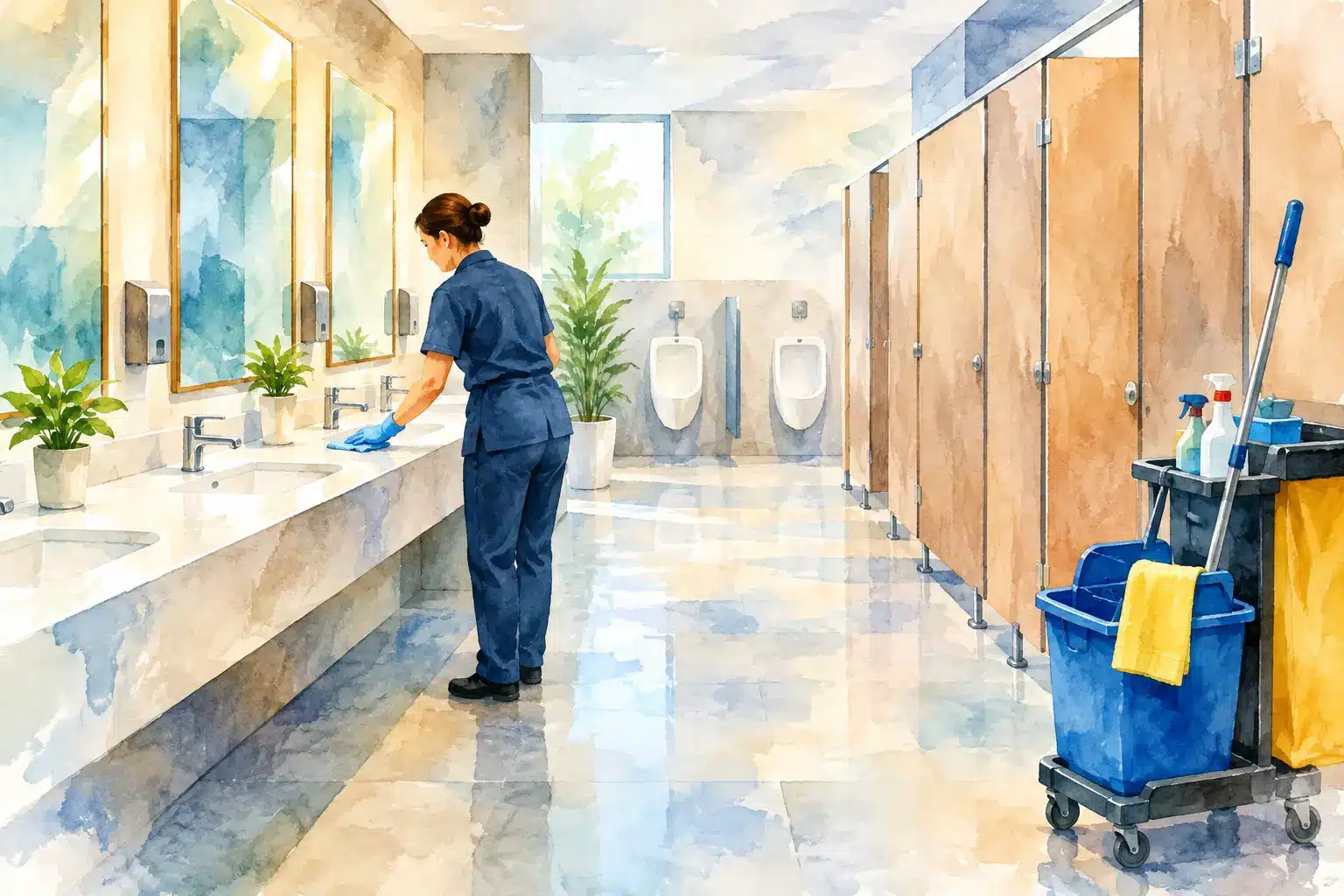
A commercial washroom is one of the quickest places staff, customers and visitors use to judge a property. If supplies are empty, floors are wet or odours linger, it can make an otherwise well-run office, shop, school or venue feel neglected. To maintain commercial washrooms properly, cleaning needs to be planned around real use, not simply completed once at the end of the day.
For Auckland businesses, washroom upkeep is about more than appearance. It supports hygiene, reduces slip risks, protects fittings and gives people confidence that the whole property is being looked after. The right approach combines frequent attention to high-touch areas with regular deep cleaning and prompt maintenance when something is not working as it should.
Start with the actual traffic pattern
A washroom used by ten office staff has very different needs from one serving a busy café, gym, retail store or healthcare site. Cleaning once daily may be enough for a low-traffic workplace, while public-facing facilities can need checks several times throughout the day.
Look at when demand peaks. In offices, this may be before work, at lunch and late afternoon. Hospitality venues may need closer attention through service periods, while gyms often require extra cleaning in the early morning and evening. A schedule that follows foot traffic helps keep washrooms consistently presentable instead of trying to recover after they have become untidy.
It also pays to separate quick service checks from full cleans. A service check may take only a few minutes and cover supplies, bins, visible mess, toilets and floor safety. A full clean should include thorough disinfection, mopping, cleaning basins and mirrors, and dealing with build-up around fixtures.
Build a practical commercial washroom cleaning routine
The most reliable routines make responsibilities clear. Whether cleaning is managed by an internal team or an external provider, everyone should know what needs checking, when it needs doing and who reports problems.
A daily clean should focus on the areas users touch most often: door handles, locks, flush buttons, taps, soap dispensers, hand dryers, grab rails and bin lids. Toilets, urinals and basins should be cleaned with suitable products, while mirrors should be polished and floors mopped with attention to corners and around toilet bases.
High-use washrooms benefit from a short checklist completed at each check. This is particularly useful for shared facilities, retail sites and busy venues where conditions can change quickly. A practical check includes:
- replenishing toilet paper, hand towels, soap and sanitiser where provided
- emptying bins before rubbish overflows or creates odour
- wiping spills and placing a wet-floor sign when needed
- checking toilets, urinals and basins are flushing and draining correctly
- removing visible marks from mirrors, doors and touchpoints
- reporting leaks, loose fixtures, blocked drains or damaged dispensers promptly
The aim is not to overcomplicate the process. It is to prevent the small issues that make a washroom feel unhygienic or unsafe.
Use products and equipment for the right surface
One product is rarely right for every washroom task. Toilet bowls, urinals, basins, tiles, stainless steel, mirrors and floors all respond differently to cleaning chemicals and tools. Strong products can damage some finishes if used incorrectly, while mild products may not remove mineral deposits or persistent odours.
Colour-coded cloths and mops are a simple way to reduce cross-contamination. Equipment used on toilets should never be used on basins, hand-drying areas or other parts of the building. Fresh mop water and clean cloths also matter. Reusing dirty water can spread grime across the floor rather than lift it away.
Always follow product instructions, including contact time for disinfectants. Spraying and immediately wiping a surface may leave it looking clean, but it may not give the product enough time to work effectively. At the same time, using more chemical than required does not make a washroom cleaner. It can leave residue, create strong smells and affect sensitive surfaces.
Control odours at the source
Fragrance can make a washroom feel fresher, but it is not a solution for an underlying odour problem. Persistent smells commonly come from overflowing bins, urine splash around toilets and urinals, blocked or poorly drained pipes, dry floor wastes, moisture in grout, or ventilation that is not doing its job.
Cleaning around the outside and base of toilets is just as important as cleaning the bowl. Urinals need regular attention to prevent scale and odour-causing build-up, especially in high-use male washrooms. Floor wastes should also be checked and cleaned as part of scheduled maintenance.
If odours return soon after cleaning, investigate rather than simply adding more air freshener. A slow drain, leaking pipe or ventilation fault may need a maintenance solution rather than another cleaning product. Acting early can prevent a minor issue becoming disruptive and expensive.
Keep floors dry and safe
Washroom floors face a constant mix of water, soap, cleaning product and foot traffic. That makes floor safety a priority. Wet patches near basins, hand dryers and toilet entrances should be dealt with quickly, and warning signs should be used whenever mopping or spill clean-up is underway.
Choose cleaning methods that suit the flooring. Tiles with textured grout lines need different care from vinyl or sealed concrete. Too much water can travel into edges and joins, while the wrong chemical may leave a slippery film. Regular spot mopping throughout the day is often more effective than waiting for one large clean after hours.
Pay attention to entry mats and the area just outside the washroom too. On wet Auckland days, moisture can be tracked in from surrounding corridors or entrances. Keeping these transition areas clean and dry helps protect the washroom floor and reduces slip hazards for everyone using the space.
Schedule deep cleaning before build-up becomes obvious
Daily cleaning keeps a washroom usable, but periodic deep cleaning protects its condition over time. Scale, soap residue, mould, grime behind fixtures and marks on grout can develop gradually. By the time they are obvious, they often require more time and stronger treatment to remove.
A deep clean may include descaling toilets and urinals, scrubbing grout and tiles, cleaning vents and exhaust covers, washing partitions and walls, removing marks from doors, and detailing hard-to-reach areas behind toilets and under basins. The frequency depends on traffic, ventilation and the type of facility. A busy gym or hospitality venue may need this work more often than a small office washroom.
Mould deserves particular attention. It is often a sign that moisture is not drying properly. Cleaning visible mould is useful, but the lasting answer may involve better ventilation, repairing leaks, resealing damaged areas or adjusting cleaning times so surfaces can dry fully.
Treat maintenance issues as part of hygiene
A washroom cannot stay clean if basic fittings are failing. Dripping taps leave water marks and waste water. A toilet that does not flush properly creates an immediate hygiene issue. Broken dispensers encourage untidy use of supplies, and damaged locks or partitions affect privacy and user confidence.
Create a simple reporting path so cleaners or staff can flag faults as soon as they see them. A photo, location and short description are usually enough to help a property manager or maintenance provider respond quickly. Keeping a small record of recurring faults can also reveal bigger problems, such as an ageing fixture, poor drainage or an undersized ventilation system.
For larger sites, it is worth grouping washroom checks with broader property maintenance. This reduces the chance that a cleaning team notices a problem but no one follows it through. Sparkle Property Services can support this joined-up approach by combining scheduled commercial cleaning with practical property maintenance where required.
Set standards that users can see
The best washroom standard is not one that only appears on a cleaning checklist. It is one users notice without thinking about it. Soap is available. Paper supplies are stocked. Mirrors are clear. Toilets flush, bins are emptied, floors are dry and the room smells neutral and clean.
Feedback from staff and visitors can be useful, particularly in customer-facing sites. If people repeatedly mention empty supplies, poor odours or wet floors, treat that feedback as an operational signal. It may mean the cleaning frequency needs adjusting, supplies are running low too quickly, or a maintenance issue is being missed.
A well-maintained washroom quietly shows that a business respects the people who use its space. Give it the same consistent care as your reception area, shop floor or meeting rooms, and it will help the entire property feel cleaner, safer and more professional.