
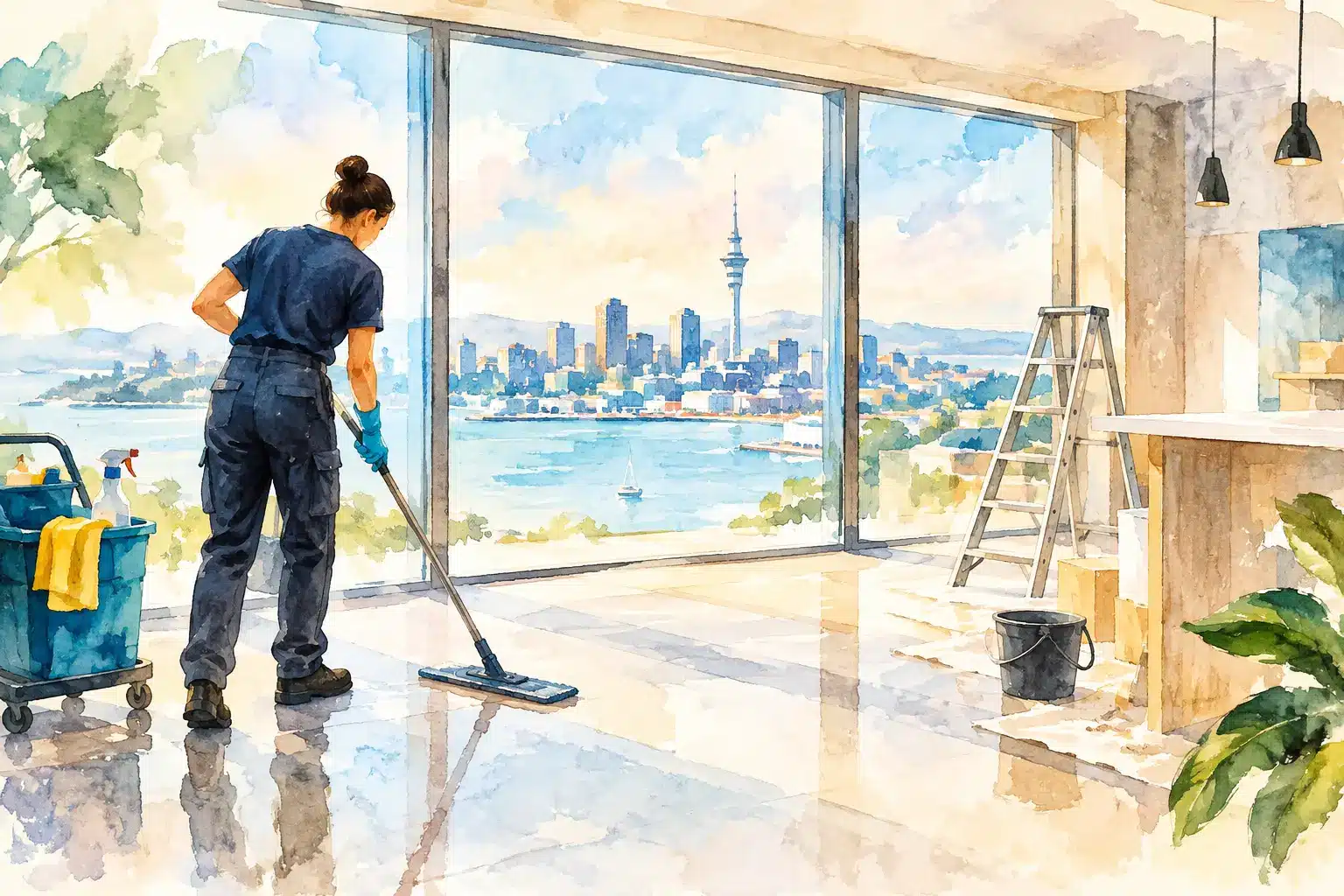
A new build can look finished long before it is truly ready to enjoy. Fine dust settles in drawers, paint flecks cling to glass, grout haze dulls tiles, and trade rubbish can linger in places you will not notice until move-in day. Professional post-construction cleaning services in Auckland turn a completed project into a clean, healthy and welcoming space – without asking you to spend your weekend chasing dust through every corner.
A builder’s clean and a final clean are not the same
Construction teams generally remove large offcuts, packaging and obvious rubbish as part of site handover. That is a valuable first step, but it is not the detailed clean needed before a family moves in, a tenant collects keys, or a business opens its doors.
A post-construction clean focuses on the residue left by building work. This includes fine dust on skirting boards, cabinetry and light fittings; adhesive marks on windows; plaster or paint splashes; grout residue; fingerprints on freshly installed surfaces; and debris caught in tracks, vents and corners. The goal is not simply to make the property look tidy. It is to make every finished surface feel properly complete.
This matters especially in Auckland, where homes and commercial spaces are often handed over on tight schedules. Builders, project managers, property managers and owners need a cleaning team that can work around final inspections, furniture deliveries and opening dates while treating new finishes with care.
When to book post construction cleaning in Auckland
The best time for a final clean is after all dusty work is complete. That means sanding, cutting, plastering, grouting, painting touch-ups and most installation work should be finished first. If several trades are still moving through the site each day, a detailed clean can quickly be undone.
For larger projects, it can make sense to schedule cleaning in stages. An initial builders clean removes heavier debris and dust once the main work wraps up. A final sparkle clean then happens immediately before handover, after the last minor repairs and touch-ups are complete. This approach is particularly useful for offices, retail spaces, hospitality venues and multi-unit properties where presentation has to be right from day one.
It depends on the project. A compact bathroom renovation may need one thorough visit, while a new home, fit-out or commercial refurbishment may require a site assessment and a tailored plan. Access, floor area, the amount of residue, the condition of windows, and whether appliances or carpets are newly installed will all affect the time required.
What a thorough post-build clean should cover
A quality clean works from high to low so dust is removed rather than shifted around. Ceiling areas, vents, ledges and light fittings are addressed before benchtops, cabinetry, walls and floors. Vacuuming with suitable equipment is essential because construction dust is much finer than ordinary household dust. Dry sweeping can send it straight back into the air.
Inside the property
Interior cleaning usually includes detailed dust removal from skirting boards, door frames, internal windows, shelves, cupboards, wardrobes and joinery. Cleaners wipe down kitchen and bathroom surfaces, remove labels where appropriate, polish accessible glass, clean mirrors, and treat visible marks left by paint, plaster, silicone or adhesive.
Floors need particular attention. Timber, vinyl, tile, polished concrete and carpet all require different products and techniques. A strong chemical may remove a stubborn mark but damage a fresh seal, leave streaks, or affect the finish. That is why identifying the surface before cleaning is just as important as choosing the right product.
Kitchens and bathrooms often take the longest because they combine multiple new surfaces. Tapware, splashbacks, shower glass, tiles, sinks, ovens and cabinetry can all carry installation residue. A careful clean brings back the intended shine without scratching chrome, etching stone, or leaving dull film on glass.
Outside and at the entry
The outside of a property shapes the first impression. Exterior windows may need cleaning after cladding, painting or landscaping work. Entryways, paths, decks, garages and driveways can collect dust, mud and material residue while trades are on site. Rubbish removal may also be needed if packaging, offcuts or unwanted materials remain after the project.
Not every site needs every service. Exterior house washing or pressure cleaning should only be used where the surface, age of the finish and site conditions make it suitable. A professional team will assess what is needed instead of applying one method everywhere.
Why specialist equipment and safe methods matter
New surfaces are not automatically tough surfaces. Fresh paint may still be curing, new cabinetry can be sensitive to excess moisture, and delicate tiles or stone may react badly to acidic cleaners. The wrong method can create a problem just as a project is reaching the finish line.
Fine construction dust also deserves care. Some building dust can be irritating, and certain materials may contain silica. Cleaning teams should use suitable protective equipment and controlled vacuuming methods rather than brushing dust into the air. Good ventilation and a methodical process help create a healthier indoor environment for the people who will use the space next.
For commercial sites, safe cleaning also protects the handover schedule. Clear walkways, dry floors and organised rubbish removal reduce the chance of a last-minute slip, trip or delay when clients, staff or inspectors arrive.
Choosing a post-construction cleaning team
The cheapest quote is not always the fastest route to a finished property. A low price can exclude detailed tasks, equipment, rubbish removal, carpet cleaning, exterior work or return visits for final touch-ups. Ask what areas are included, whether the quote is based on the site’s current condition, and how the team handles stubborn building residue.
You also want a provider that can respond when project timing changes. Construction schedules move, key deliveries run late, and final defects can hold up a clean by a day or two. Reliable communication, insured cleaners and clear booking arrangements make those changes easier to manage.
Sparkle Property Services can coordinate post-build cleaning with complementary services such as window cleaning, carpet cleaning, rubbish removal, exterior washing and ongoing property maintenance. That means less time spent organising separate contractors when the work list is already long.
Preparing the site for an efficient clean
A few practical checks before the cleaners arrive can save time and help achieve a better result. Ensure water and power are available, remove valuable tools or materials that are still needed by trades, and make sure access arrangements are confirmed. If there are known issues such as wet paint, uncured sealant, damaged surfaces or areas that must not be touched, flag them before work begins.
For occupied properties undergoing renovation, protect personal belongings and let the cleaning team know which rooms are ready. It may be better to clean completed areas first and return for the final room once the trades have finished. This is often more cost-effective than recleaning the whole home after one more day of sanding or drilling.
A clean handover sets the standard
Whether it is a renovated villa, a new family home, an Auckland office fit-out or a retail opening, the final clean is the moment the project starts to feel real. It lets the workmanship show, helps protect new finishes, and gives occupants confidence that the space is ready for daily life.
Book cleaning close enough to handover that the result stays fresh, but only once the dusty work is genuinely behind you. That small piece of planning can turn a rushed final week into a property that looks polished, feels healthy and is ready to make the right first impression.