
That musty smell when you first switch on the heat pump is not something to mask with air freshener. It is often a sign that dust, moisture and microbial growth have built up inside the unit. This air conditioner cleaning guide explains what Auckland households and workplaces can safely clean themselves, what should be left to a professional, and how regular care helps keep your indoor spaces fresher, healthier and more comfortable.
In New Zealand, many wall-mounted heat pumps work year-round. They cool rooms through humid summers, warm them through damp winters, and collect airborne dust in every season. A clean unit can circulate air more effectively. A neglected one may blow stale odours, drip water, struggle to reach the set temperature, or use more power than it should.
Why air conditioner cleaning matters
Your air conditioner draws room air through filters and across internal components before sending conditioned air back into the space. Filters catch much of the visible dust, but fine particles can still settle on the indoor coil, fan barrel and louvres. In humid conditions, moisture on the coil and drain system can create an environment where mould and bacteria thrive.
For a family home, this can mean a bedroom or living area that never feels quite fresh. For an office, retail store, Airbnb or hospitality venue, it can affect visitor comfort and the professional presentation of the property. People with allergies, asthma or sensitivities may notice dirty airflow sooner, but clean equipment benefits everyone.
Cleaning also protects performance. When filters are blocked, the system has to work harder to move air. A basic filter clean may improve airflow quickly, while a deep internal clean can address grime that ordinary household cleaning cannot reach. Results depend on the unit’s condition, its age, and whether there is an underlying fault, but preventative care is usually far easier than restoring a heavily neglected system.
Air conditioner cleaning guide: safe routine care
Before touching the unit, turn it off with the remote and isolate power at the wall switch or power point where possible. Never spray water or cleaning chemicals into electrical areas, and do not remove covers that expose wiring or internal components.
For most homes, the routine task is cleaning the washable filters. Check them every month during periods of frequent use, and clean them when you can see dust building up. Properties near busy roads, building sites, beaches, or with pets may need more frequent attention.
Clean the filters gently
Open the front panel following the manufacturer’s instructions and slide the filters out carefully. Take them outside and use a vacuum with a soft brush attachment to remove loose dust. If they are still grimy, rinse them under lukewarm water. Avoid harsh detergents, scrubbing brushes and very hot water, which can damage the mesh.
Let filters dry completely in a shaded, well-ventilated area before reinstalling them. Putting damp filters back into a heat pump adds unwanted moisture and can encourage odours. While the filters are out, wipe the front panel, air outlet and visible louvres with a clean, lightly damp microfibre cloth.
Do not bend the delicate fins behind the filters or push a vacuum nozzle into the coil. Those fins are easily damaged, and restricted airflow can follow. If dust is visible deep inside the unit, that is usually the point to arrange professional cleaning rather than trying to reach it yourself.
Keep the area around the outdoor unit clear
The outdoor condenser needs room to draw in and release air. Remove leaves, cobwebs, grass clippings and loose rubbish from around the unit, and keep plants trimmed back. Check that nothing has been stacked against it and that water can drain away from the base.
A gentle wipe of the outer casing is fine, but avoid hosing the unit, pressure washing it or applying cleaning products to it. Outdoor units contain electrical parts, delicate coils and drainage components. A professional can safely clean the coil and check for issues that may not be visible from the outside.
Signs your heat pump needs a professional clean
A filter clean is worthwhile maintenance, but it cannot remove all internal build-up. Arrange a professional inspection and clean if the unit has a persistent musty smell, blows noticeably weaker air, leaks or drips indoors, makes new noises, or has visible mould around the vents. You should also seek help if it runs constantly without heating or cooling the room properly.
Black spotting, slime around the drain outlet, or recurring water leaks should not be ignored. The cause may be a blocked condensate drain, mould growth, poor installation, or a mechanical issue. Spraying fragrance or supermarket disinfectant into the vent may hide the smell briefly, but it does not deal with the source and can damage components.
Commercial properties should be especially proactive. In offices, gyms, healthcare settings, aged-care facilities and hospitality venues, a poorly maintained system can affect comfort across a busy space. Cleaning schedules should reflect how long the system runs, the number of people using the area, and the level of dust, moisture and cooking fumes present.
What a deeper air conditioner clean should cover
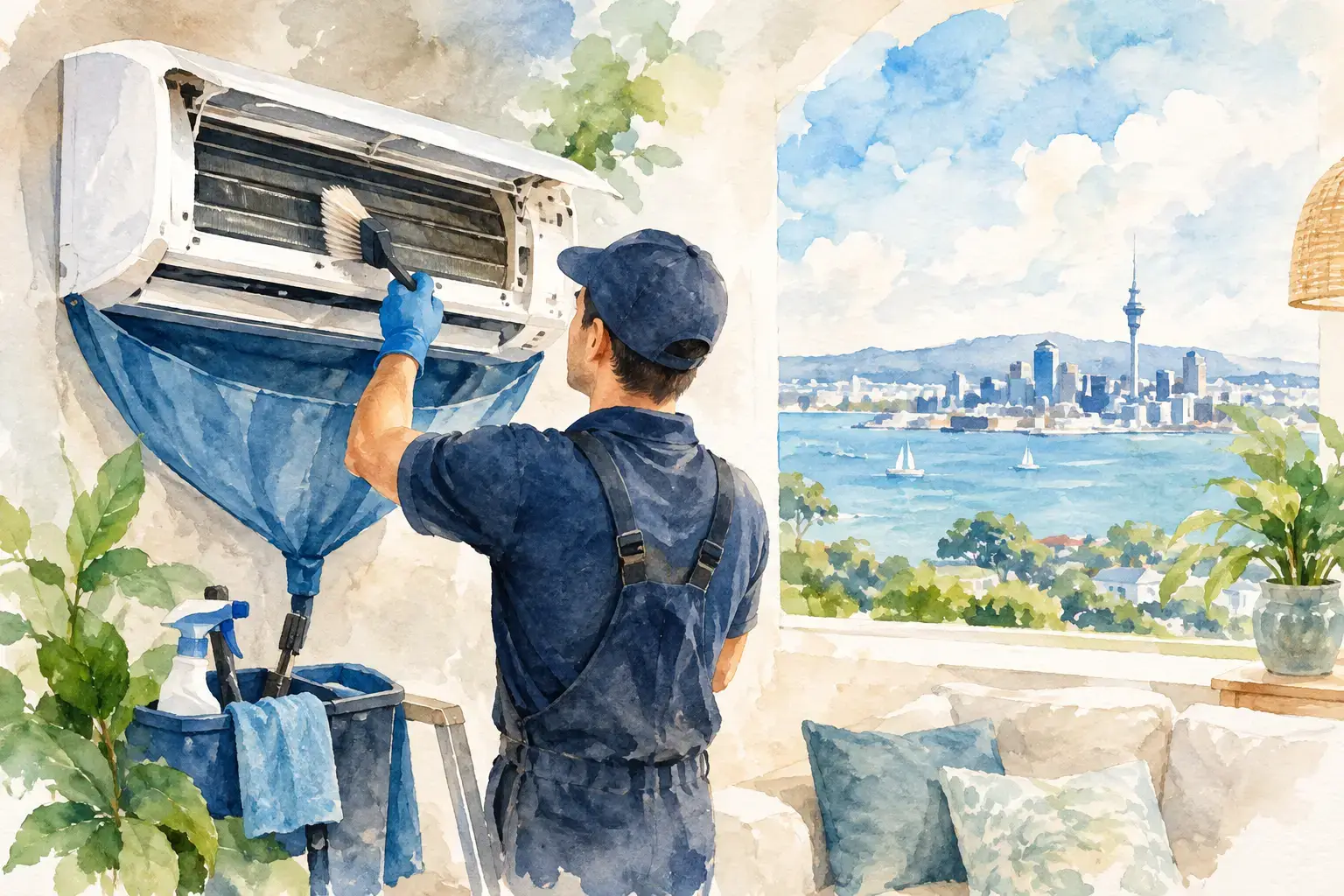
A proper deep clean is more than wiping the front cover. Depending on the type of system and its condition, a trained technician may clean the indoor coil, fan barrel, louvres, condensate tray and drain line, as well as inspect accessible components for dirt, mould and wear. They can also assess airflow and identify problems that cleaning alone will not solve.
The right method matters. Strong chemicals, steam used incorrectly, or excessive water can damage electronics, insulation and wall finishes. This is why DIY videos that involve dismantling major parts of a split system can be risky, particularly in rental homes, apartments and commercial premises.
If you manage multiple properties or simply want one reliable team for the work, Sparkle Property Services can coordinate air-conditioning care alongside regular cleaning and broader property maintenance. It is a practical way to keep the indoor environment and the rest of the property looking after one another.
How often should you clean an air conditioner?
There is no single timetable that suits every property. As a useful starting point, inspect filters monthly when the system is in regular use and clean them every one to three months. A professionally cleaned indoor unit is commonly worthwhile every 12 months, although homes with pets, smokers, allergy concerns, high humidity or heavy daily use may benefit from more frequent servicing.
For a lightly used guest room unit, annual filter checks and cleaning before the busy season may be enough. An Airbnb heat pump, a family living-room unit used every day, or a café system exposed to higher traffic and odours may need closer attention. Landlords can also include heat pump cleaning in planned maintenance between tenancies, when access is easier and the property can be prepared properly for new occupants.
Small habits that keep air fresher for longer
Use the system at a sensible temperature rather than forcing it to work at an extreme setting. Keep doors and windows closed while heating or cooling a room, and avoid drying wet washing directly beneath the indoor unit. Where your model has a self-clean or dry function, use it according to the manufacturer’s instructions after cooling on humid days.
Regular household cleaning helps too. Vacuuming carpets and upholstery, reducing dust on high surfaces, and managing indoor moisture means less debris is available for the heat pump to pull through its filters. If condensation is common in the home, address ventilation and moisture issues as well as cleaning the unit. Air-conditioning care works best as part of a cleaner, drier property overall.
A clean filter is a simple job, but a fresh-smelling, efficient system relies on more than the filter alone. Give your unit a quick check before the next hot or cold spell, and arrange expert help early if the airflow, smell or drainage does not seem right. Your home, tenants, staff and guests will notice the difference the moment the air turns on.